
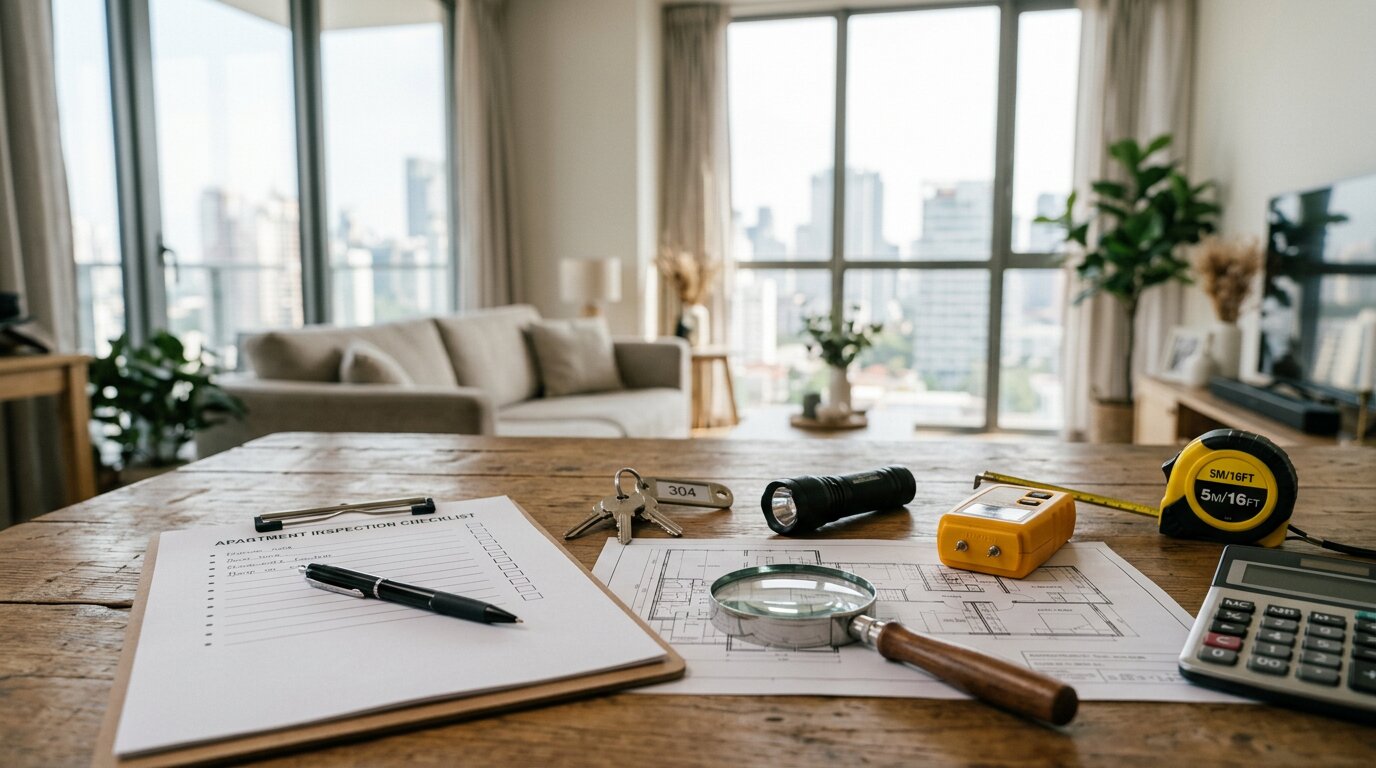
When you’re about to buy an apartment, it’s easy to focus on the view or the kitchen and ignore the details that could cost you later. You’ll need to think beyond the listing price, look closely at the building’s condition, and understand what you’re really signing up for in fees and legal terms.
Before you decide anything, there are a few critical checks you can’t afford to skip.
Set Your Apartment Budget and Total Buying Costs
Before reviewing listings or visiting show homes, first determine how much you can realistically afford, including all major costs linked to the purchase. Start by subtracting essential expenses such as food, transportation, utilities, insurance, and existing loan payments from your monthly income. The amount left over is what you can allocate to housing costs. Use this remaining amount to estimate a comfortable EMI (equated monthly instalment). With common home loan interest rates in the range of 6-8% for tenures of 20-25 years, it's generally advisable to keep your EMI within 30-35% of your net monthly income to reduce repayment risk and maintain financial flexibility.
Plan to contribute at least 20% of the property value as a down payment, as most lenders won't finance the entire purchase price. Factor in approximately 7-8% of the property value for registration charges, stamp duty, and notary fees, along with around 1-2% for professional services such as legal review, valuation, or brokerage.
Finally, set aside an additional 15-30% of the property cost for furnishing, basic appliances, interior work, and any necessary renovations or repairs. Considering all of these components in advance will give you a more accurate view of the total funds required and help you set a realistic apartment budget.
Whether you’re looking for an apartment, a house, or office space in France, Cribs offers in-depth insights, tailored recommendations, and seamless communication with real estate agents. For a smarter, easier property search, Cribs is the way to go. Check their website here: https://cribs.immo/fr/en
Choose the Right Location and Type of Apartment
Once you have defined a realistic budget, the next step is to decide where to buy and which type of apartment matches your needs and objectives. Prioritise locations with good access to employment areas, schools, shops, healthcare facilities, and public transport, as these areas tend to show more stable demand and usually achieve better rental and resale performance. Assess the distance to everyday amenities such as bakeries, supermarkets, pharmacies, green spaces, and, in particular, SNCF or metro stations. It's advisable to visit the neighbourhood at different times of day, including at night, to identify potential disturbances such as bars, nightclubs, or heavy traffic.
In Paris, the Élan law framework requires you to consider factors such as the year of construction, the number of rooms, and whether the property is rented furnished or unfurnished, as these can affect rental caps and regulations. Compare recent transaction prices in the same area and building type, and, where possible, use independent valuers or notarial data to verify the surface area, assess the layout, and determine the added value of features such as balconies or terraces.
Inspect Apartment Condition, Structure, and Key Systems
When evaluating a potential apartment, focus on its physical condition and the functionality of key systems rather than its decor. Examine walls, ceilings, and floors for cracks, stains, or mold, as these can indicate water intrusion or structural issues that may be costly or difficult to resolve.
Check electrical components by testing each outlet and light switch with a small device such as a phone charger or outlet tester. Look for burn marks, loose plates, or exposed wiring, and visually inspect the breaker or fuse box for clear labeling, corrosion, or signs of overheating. Assess the heating, air conditioning, and hot water systems by turning them on and letting them run briefly. Listen for unusual noises, note how quickly they respond, and check for pooling water around boilers, heaters, or air-handling units, which can indicate leaks or drainage problems. Open and close all windows and interior and exterior doors to ensure they move smoothly, latch properly, and lock securely. To check for drafts, you can use a candle or a small piece of tissue near window and door frames; visible flickering or movement may indicate air leaks that can affect comfort and energy costs.
Finally, test all plumbing fixtures. Flush toilets to see if they refill promptly and fully, run faucets to check water pressure and temperature consistency, and observe how quickly sinks, tubs, and showers drain. Look under sinks and around fixtures for any signs of active leaks, moisture damage, or mold growth.
Check Apartment Legal Documents, Diagnostics, and Seller/Builder Reputation
After reviewing the apartment’s physical condition and systems, it's important to verify that the legal documentation and the parties involved are reliable. In Paris, check that all mandatory diagnostics are available and up to date:
- DPE (Diagnostic de performance énergétique): pay particular attention to G‑rated properties, which will be banned from rental from 2025.
- Carrez law measurement: confirms the legally usable floor area.
- ERP (État des risques et pollutions): outlines natural, mining, technological, seismic, and pollution risks.
- Termite report: usually valid for 6 months, depending on the local prefectural decree.
- Asbestos (for buildings with a construction permit issued before 1 July 1997).
- Lead (for residential buildings constructed before 1 January 1949).
- Electrical and gas diagnostics (for installations older than 15 years).
- Sanitation report (especially for non‑collective sanitation systems). Confirm compliance with rent control rules in Paris under the Élan law in force since 1 July 2019, including the reference rent, any permitted surcharge, and disclosure obligations in the lease.
- Title deed: to confirm ownership, boundaries, and any rights or restrictions.
- Encumbrance or lien status: mortgages, charges, easements, or disputes affecting the property.
- Tax situation: property tax payments, housing tax (where applicable), and any outstanding liabilities.
- Co‑ownership or association rules: bylaws, use restrictions, charges, and upcoming works voted by the co‑owners’ association or housing society.
- Seller or developer background: track record on previous projects, delivery timelines, litigation history, and financial stability, using public records, regulatory portals, and independent references where possible.
Estimate Apartment Charges, Renovation Budget, and Future Resale Value
Before committing to a purchase price, it's important to understand the apartment’s overall financial profile: recurring charges, potential renovation costs, and the impact of these factors on future resale value.
Begin by estimating monthly condominium charges, including water, heating, electricity for common areas, boiler maintenance, chimney sweeping, and any annual building fees. Verify which services are included, whether costs relate only to common areas, and whether individual metering is in place, especially in buildings with high energy consumption. This helps you distinguish between shared and individual expenses and anticipate changes if consumption patterns or energy regulations evolve.
Next, use the DPE (energy performance) label as a basis for a renovation budget. Moving from a G/F rating to C/B often involves insulation work, upgrading windows, improving or adding mechanical ventilation (VMC), and modernizing the heating system. These improvements can reduce operating costs, ensure compliance with current or future rental regulations, and make the property more attractive in the market.
Finally, factor in closing costs (notary fees, taxes, and any associated transaction expenses) and analyze recent comparable sales in the same area and building type. This comparison will help you assess whether the total investment (purchase price plus work and charges) is in line with local market values and likely future resale potential.
Conclusion
When you check these key points before buying an apartment, you protect your money and your peace of mind. You’ve set a clear budget, chosen a location that fits your life, and inspected the building’s structure and systems. You’ve also verified the legal documents and weighed ongoing costs, renovation needs, and future resale value. Now you’re ready to move forward confidently and choose a home that truly works for you.